Pain is described as physical or mental suffering that originates from a variety of sources. It can
result from emotional factors or as a reaction to trauma or disease. Each person has an individual
pain threshold, which can be:
Hypokinetic (low energy) – associated with high tolerance to pain, or
Hyperkinetic (high energy) – associated with low tolerance to pain.
Pain and anxiety are controlled and managed based on our knowledge of medications and
appropriate techniques. The two main approaches to pain control are:
Anxiety reduction
Managing emotional stress factors through psychological methods such as:
- hypnosis,
- relaxation,
- distraction techniques,
- reassuring communication,
- and specific approaches used in dental treatment.
Conscious sedation
A mental and physical relaxation of suffering, without loss of consciousness. This is achieved
through pre-medication (sedative drugs acting on the central nervous system), administered
orally, intramuscularly, or intravenously.
Some anxiolytics used in these cases include:
- Benzodiazepine family – Xanax, Ativan, Librium, Valium, Serax;
- Barbiturate family – Nembutal, Surital, Luminal, Amital;
- Hypnotic family – Chloral hydrate, Equanil.
Local anesthesia
Applied while the patient is conscious, it blocks the nerve endings that transmit the sensation of
pain to the brain.
What is sedation?
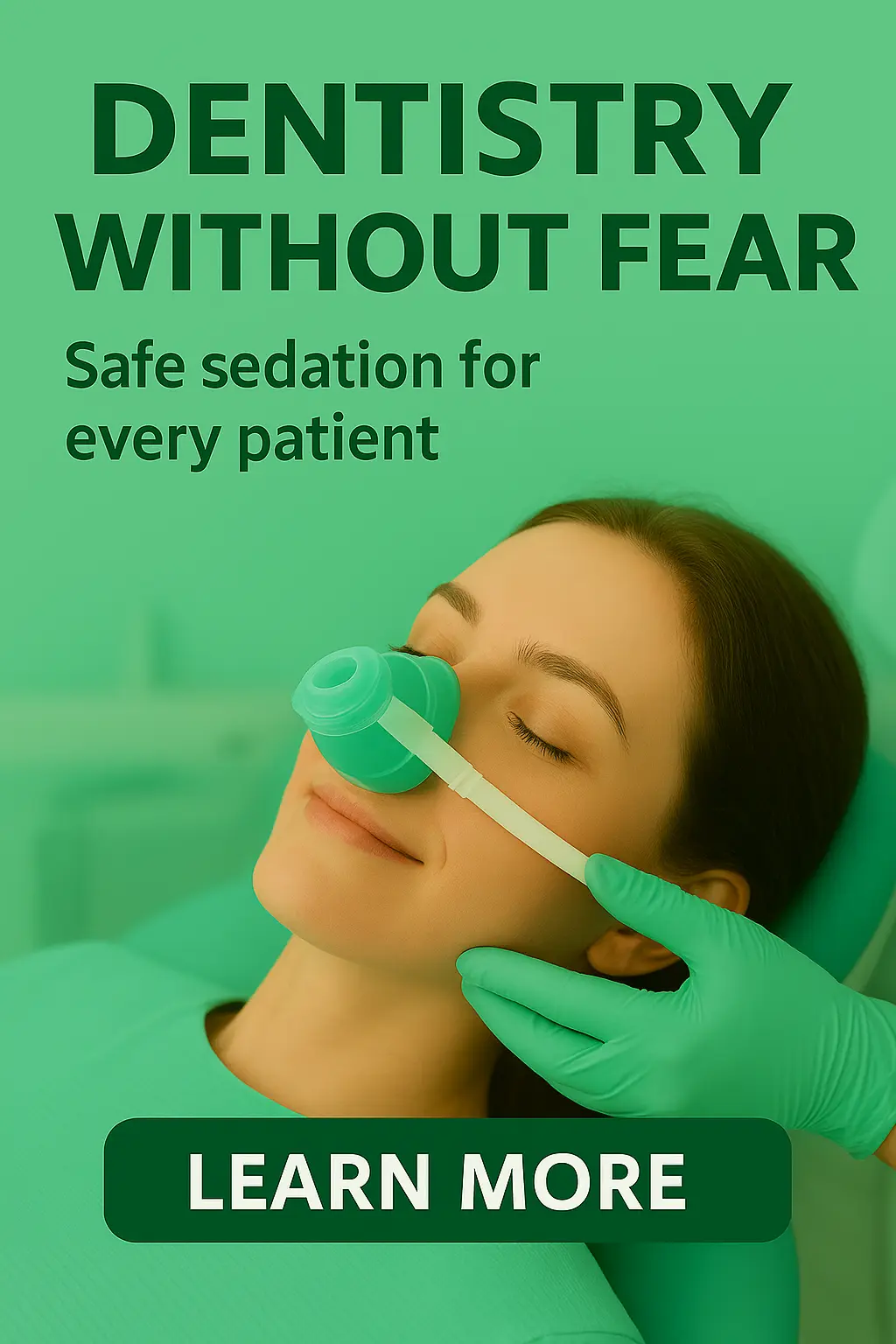
Sedation is a medical procedure used to calm and relax the patient during dental treatments,
without putting them into a deep sleep (as with general anesthesia).
The patient remains conscious, but feels calm, unafraid, and often does not fully remember the
procedure.
When is sedation used?
Sedation is mainly used for patients who:
- have fear or high anxiety about the dentist,
- need to undergo long or complex dental treatments,
- have a high sensitivity to pain,
- are children who do not easily cooperate,
- have underlying conditions that make it harder to cope with stress.
Is sedation safe?
Yes. Sedation is a safe procedure when performed by trained professionals in controlled clinical
settings.
Before any treatment, the dentist or anesthesiologist carries out a full health assessment to
choose the most appropriate type of sedation for the patient.