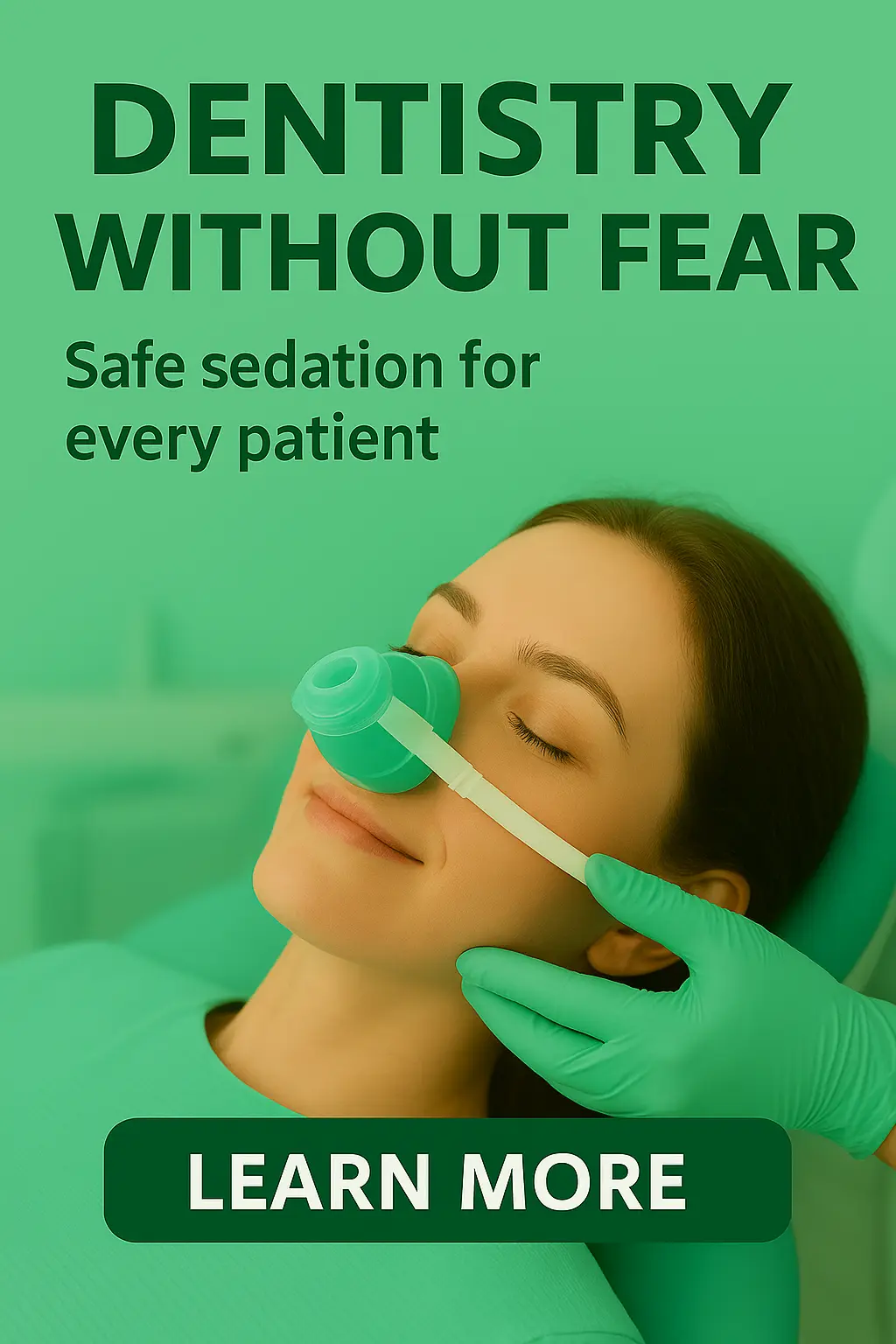
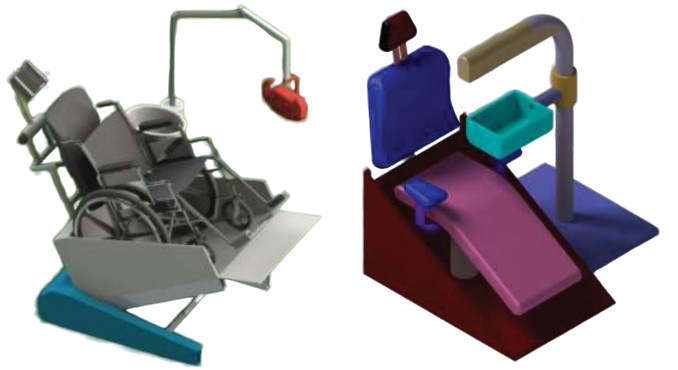
“Patients like this—I might have encountered someone who is paralyzed. As for patients with Down syndrome, there isn’t a specific way to keep a patient in the dental chair when they don’t open their mouth or cannot stay still. The only options are to be aggressive or to use sedation. It’s not that we don’t want to, but it’s not feasible. I cannot offer sedation at the clinic, not even conscious sedation. To provide sedation, you need a group of patients willing to pay for this service. There are new methods with nitrous oxide, which are not very expensive, and the equipment is large, but when it comes to making an investment, you have to consider how often you will use it”.
“That’s true. We helped one patient sit in the chair, and he had very strong hands that moved him while seated. With a little help from us, of course, everything else was under my control. Then with another gentleman, he stayed in his chair while I moved around him. Since the dental chair instruments can move, I adapted to the patient. I didn’t do anything less than I would for a normal patient. My posture was just a bit more awkward. I wasn’t sitting in the chair but around the patient. I even took the suction device from another chair and placed the patient in the middle. He didn’t speak. He had suffered paralysis”.
“As for other patients in this group you mentioned, who we might have treated, they are people with ADHD. Parents of such patients usually don’t refer them. Even when filling out the medical chart, they feel embarrassed to admit that their child has a problem. They say: ‘Look, my child has a toothache, you check it.’ And then I have to find the solution myself. When you start asking: ‘What medication is he taking?’—they say: ‘No, he’s not taking anything.’ When treatment begins, they gradually start to express themselves, telling you step by step that the child might have allergies”.
“Fear comes only from infrastructure and working conditions, not from the professional aspect, because a tooth decays, fills, and is treated the same in normal and special-needs patients. We don’t do anything differently. What bothers me is the infrastructure, which I don’t have for this category. And I consciously choose that, since I have only three tools when in reality I need ten, I choose not to do anything that could harm this patient”.
“I cannot say I was afraid. It’s just the responsibility to serve the patient and achieve a good result in the end. I’m speaking mostly about the case of the girl with autism. It starts with a conversation with the parent. The girl had problems with speech and hearing, besides being autistic, but she still understood and was a bit fearful. If you told her that the therapist would notice if she didn’t behave, she would behave. We went step by step using few words, just like with a normal child. The first day was simply an introduction. The next day, I seated her in the chair. I showed her the instruments as a game. We touched and tried them in our hands first, and then in the mouth. It was just a cleaning session. During the first session, she got familiar with me, the environment, and the clinic—a short conversation. The second session, I tried to seat her in the chair and showed all the instruments, perhaps performing a small intervention. The third session continued with procedures, always in the form of play. With the boy with ADHD, mobility was present the whole time, but I managed. With him, I performed a tooth filling and local anesthetic infiltration with a needle. It took about 50 minutes for a second-grade filling. For a normal-development patient, it takes around 20 minutes. Not counting children, because even if the child is normal, there are still fears and doubts, which take time—50 minutes starting from the initial phase before I start anesthesia. Sedation is a very good method to prevent the patient from feeling pain, and since it isn’t offered as a service in the clinics I’ve worked in, you have to convince the patient to accept anesthesia for numbing. You have to introduce a needle and
present it as medicine that puts the tooth and the cavity to sleep”.